


Cloud Server Management with Docker, Project Moby, & Kubernetes
Last week some of the world’s leading developers of cloud hosting solutions came together at the annual Docker Convention in Austin, Texas to discuss ecosystem integration in the container and virtualization software communities. Docker is an open source framework that allows for the management of portable virtual network server environments that can be replicated and scaled in elastic cloud architecture. Docker can be deployed with the Kubernetes framework developed by Google that the company uses internally to manage billions of simultaneous server instances per day in business operations. Other examples of PaaS companies using Docker and Kubernetes are Cloud Foundry, Mirantis Cloud Platform, Red Hat OpenShift, and Bitnami stack snapshots.
DockerCon 2017 – Austin, Texas (April 17-20, 2017)
The 2017 DockerCon included the announcement of LinuxKit, a case study of enterprise utilization of Docker by Visa in online corporate operations, a state of the union address by Docker CEO Ben Golub, briefings on Project Moby, and presentation on the use of Docker containers with Microsoft’s Hyper-V cloud platform. “Docker has three major philosophies: usable security, trusted delivery, & portability,” Golub stated in his keynote address. The second day of the convention highlighted new software solutions from container eco-system companies, third-party developers, and start-ups. It is estimated that over 400 of the top 2000 enterprise companies have already adopted Docker for use in their IT departments. Docker is currently fully integrated with the AWS, Google Cloud, & Microsoft Azure cloud server platforms.
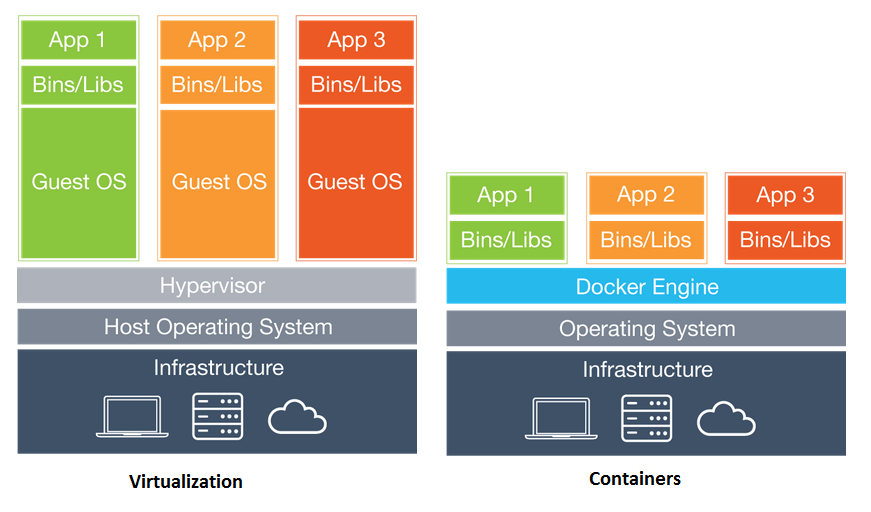
Docker – Cloud Containers for App Development
Docker allows programmers, developers, and systems administrators to create containers using virtualization with a focus on bundling stack software at the application layer. This can be beneficial for custom programming environments that need to be maintained with specific versions of server extension software or microframeworks. Docker functions in a manner similar to VMware or KVM in creating virtual server instances, but with a greater optimization of server resources and portability between hardware. Docker can also be used with AWS, Kubernetes, SwarmKit, Red Hat OpenShift, Mirantis Cloud Platform, and other software to launch elastic cloud clusters that scale with web traffic and keep the largest websites in the world online for millions of simultaneous users. Microsoft and Oracle integration with Docker allows large companies and custom software platforms to mature applications with a focus on web development, cloud hosting, and programming language requirements.
Docker (the open source framework) for creating and managing containers, and Docker (the company), founded by Solomon Hykes & led by CEO Ben Golub, are closely interrelated but not identical. Docker is considered one of the “unicorn” companies of Silicon Valley, with over $1 billion in private valuation and investments from Sequoia Capital, Greylock Partners, and Insight Venture. The company has released two major versions of the software: Docker CE (free) and Docker EE (enterprise).
Social Media: SiliconANGLE – #DockerCon2017
DockerCon 2017 Preview – “Sam Kahane talks with CUBE host Stu Miniman about DockerCon 2017. Topics include this history of Docker as both a company and a platform, and what to look forward to this year at the show.”
Kubernetes – Automated Cloud Cluster Deployment
Kubernetes evolved out of the first 15 years of research and development in Google’s data centers, representing the core technology used by the company to launch web server containers in cloud clusters that scale to the immediate requirements of network browser traffic. Kubernetes was released in 2015 by Google and donated to the Cloud Native Computing Foundation under open source software standards. Kubernetes functions as a network management system for the automated deployment, scaling, and operation of containerized web & mobile applications. Kubernetes is used to manage the Google Cloud server network, as well as by enterprise corporations like eBay, Box, Wikimedia, NYT, NBC, Samsung, & SoundCloud. Kubernetes developers gather in the annual “KubeCon” event, which is similar to DockerCon in focusing on platform ecosystem development.
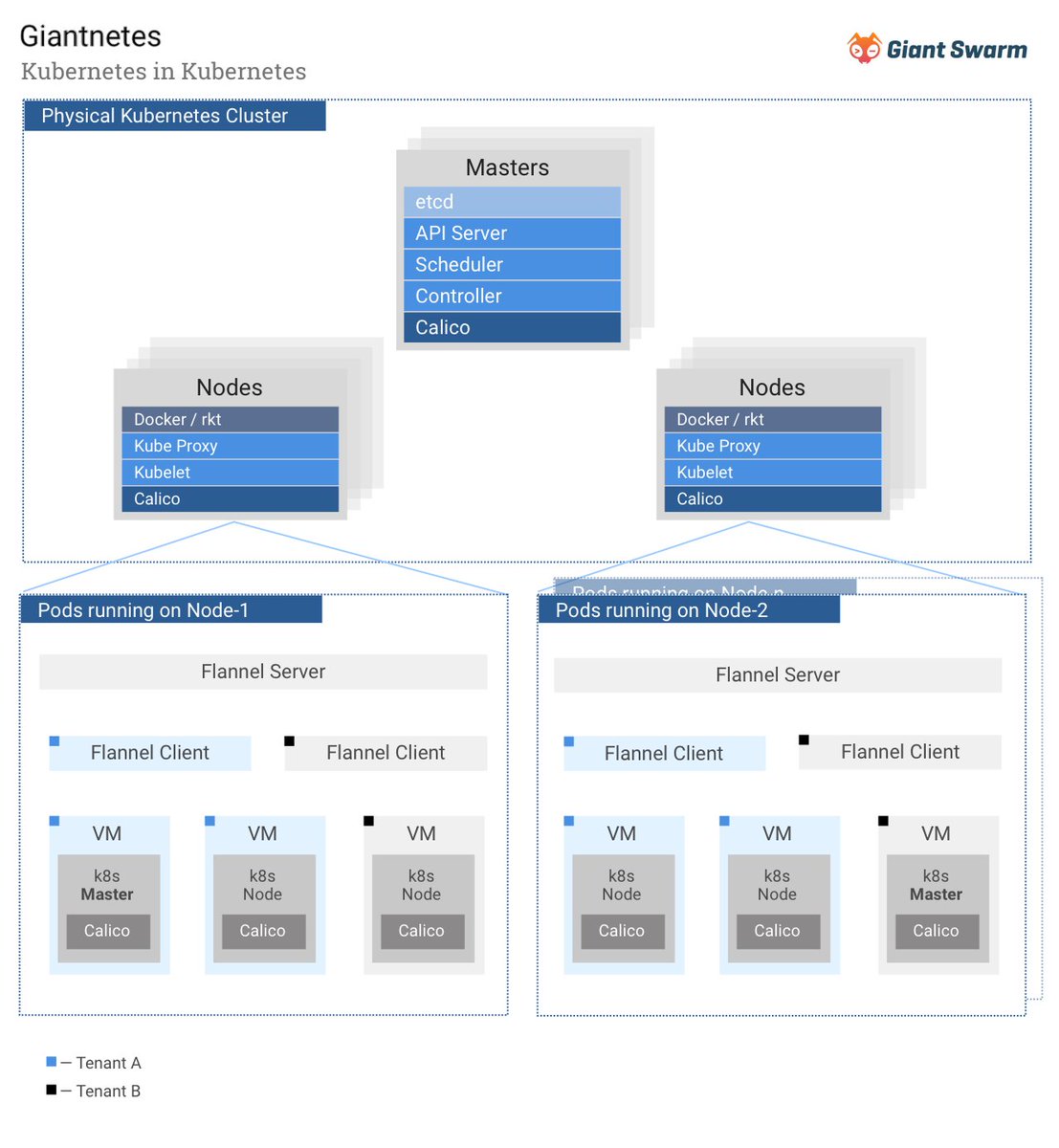
Kubernetes – Web server networks in cloud clusters scale to keep the most popular sites in the world online through any web traffic requirements. Follow Kubernetes on Twitter.
Containers – Virtualization for Web & Mobile App Development
Containers are an important aspect of new cloud computing platforms and can be compared in many ways to VPS platforms with the Docker engine replacing other hypervisor frameworks. Containers allow system administrators to partition and allocate cloud network hardware more efficiently than VPS platforms, with greater portability between local and remote hardware. Containers allow web developers and custom application programmers to configure the web server to support the exact extensions needed to support code and database requirements. These containers can then be cloned, replicated, and launched into elastic cloud networks on the web to host websites and mobile apps to millions of people at a time, at a scale that single server hardware solutions cannot successfully manage. Docker has led an industry trend towards the “containerization” of app development by taking advantage of new developments in virtualization and cloud data management at enterprise scale.
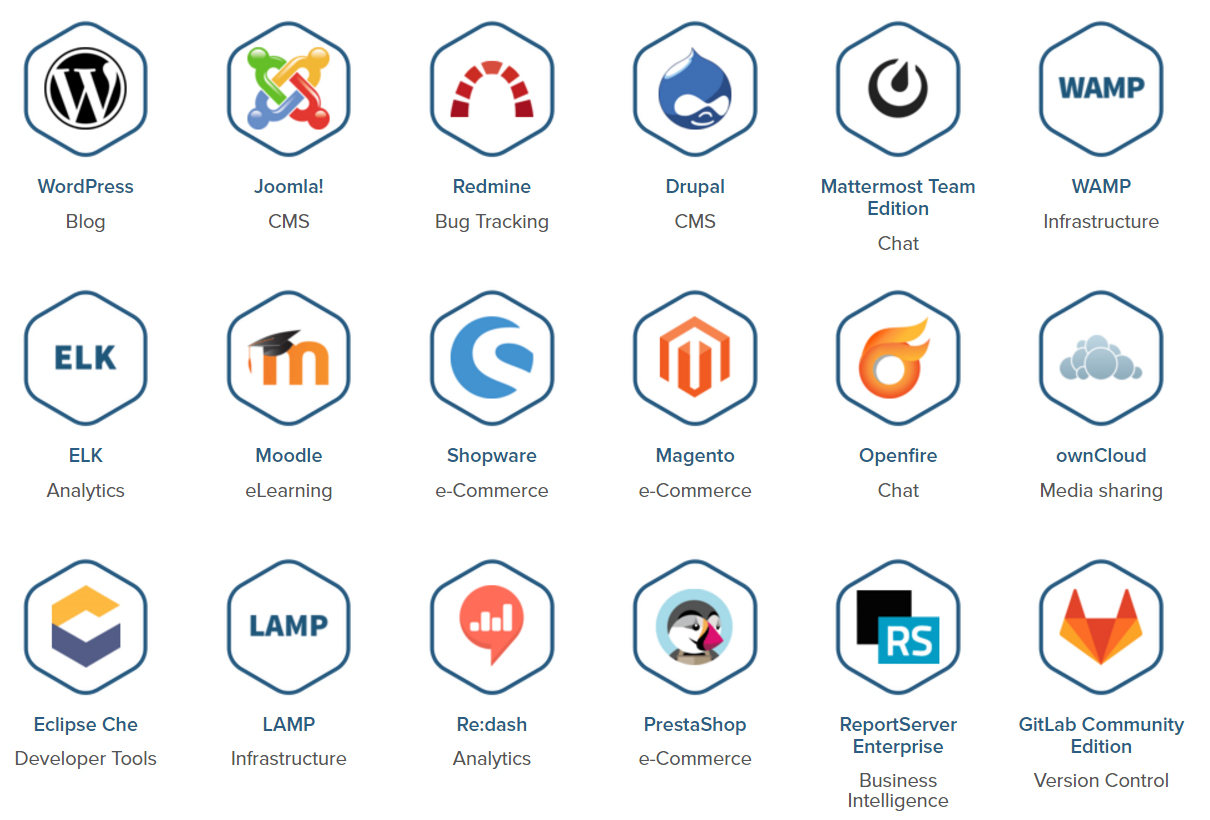
Bitnami – Deploy full stack software installations including Linux, Apache, Nginx, PHP, Python, Perl, & other programming languages in minutes using Bitnami snapshots. Learn more about Bitnami.
Ecosystem Vendor Solutions – Bitnami, OpenShift, Mirantis, & Cloud Foundry
As Docker and Kubernetes are increasingly adopted as platform standards for cloud hosting and corporate IT management, there is an increasing focus in the community on the development of third-party ecosystem companies, software services, and business solutions. Docker and Kubernetes are fully integrated with Oracle, IBM, Microsoft, Amazon, and Google cloud services. Many companies are using container technology to manage elastic cloud deployments for popular web and mobile applications. New trends are for machine learning, deep learning, and artificial intelligence apps to become increasingly containerized as they are managed in production release. Bitnami’s stack software snapshots, Red Hat’s OpenShift dedicated server clusters, the Mirantis Cloud Platform based on OpenStack, and Cloud Foundry’s managed cloud services are all good examples of how Docker and Kubernetes ecosystem companies are developing new standards in cloud computing.
The Moby Project, announced at DockerCon 2017, has been launched to develop a series of standardized libraries, frameworks, and APIs for the variety of vendors in the Docker ecosystem to work together on a unified basis in developing the platform. Learn more about the Moby Project.
Social Media: SiliconANGLE – #DockerCon2017
DockerCon 2017 #theCUBE – “CUBE hosts Stu Miniman and James Kobeilus wrap up the days coverage of #DockerCon 2017 and talk about their impressions from the show.”
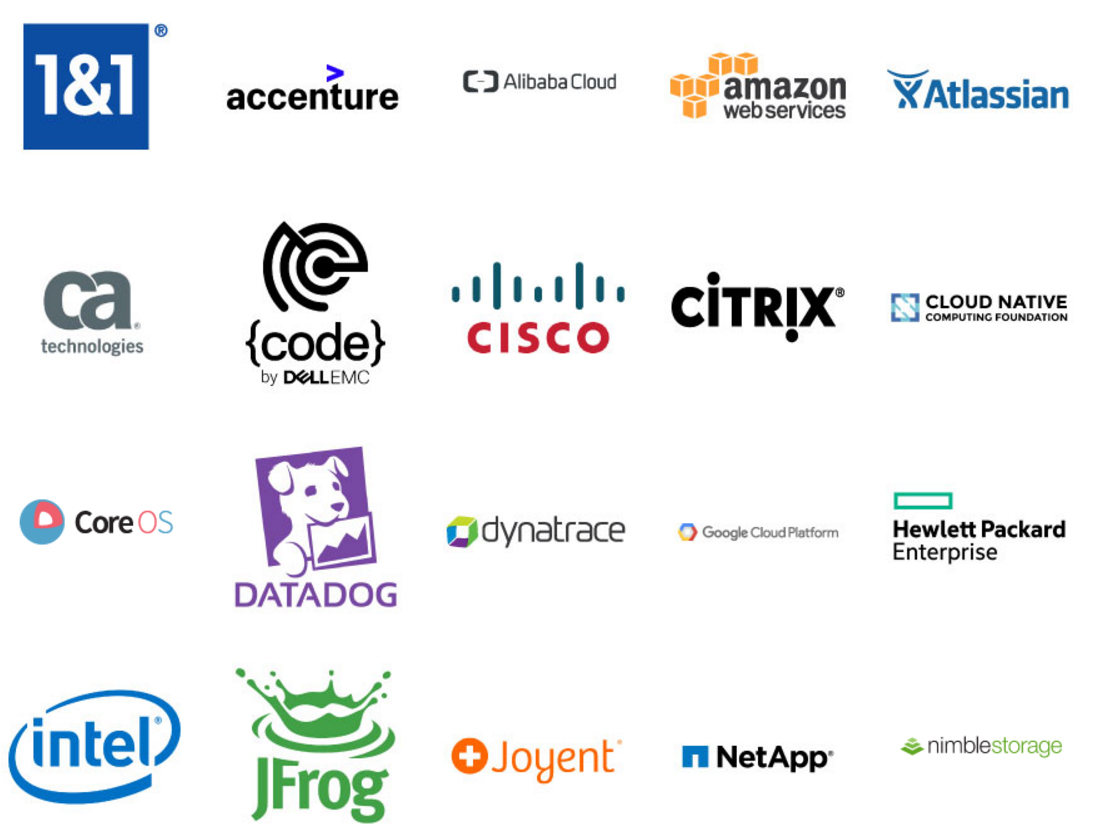
Gold Sponsor Companies of DockerCon 2017 – Docker is already in use by thousands of companies in the management of IT departments and online resources. Follow DockerCon on Twitter.
Social Media: Twitter – #DockerCon2017
[BREAKING] Introducing #MobyProject: A new #opensource project to advance the software containerization movement https://t.co/D005rLr9ZU pic.twitter.com/SY1lL2YYQt
— DockerCon (@DockerCon) April 18, 2017
@solomonstre announces #linuxkit #Dockercon2017 pic.twitter.com/07BAP3Zd30
— Iain Gray (@iaincgray) April 18, 2017
#DockerCon John Gossman introduces Linux containers on Windows 2016 powered by LinixKit! The @docker and @Microsoft partnership is awesome. pic.twitter.com/EQihAeo6tr
— Aaron Huslage (@huslage) April 18, 2017

